What is Käsespätzle? The Ultimate Guide to Germany’s Comfort Food
Lisa Park • June 13, 2026
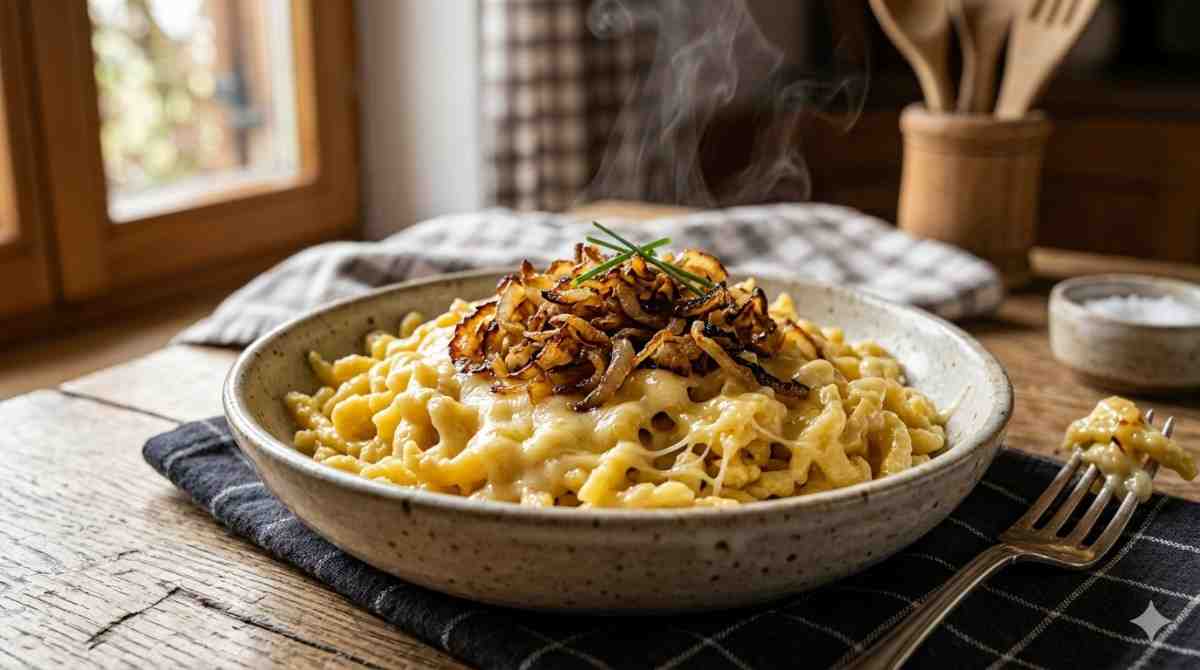
If there’s one dish that captures the essence of cozy Alpine cooking, it’s Käsespätzle—often described as Germany’s answer to mac and cheese, but with far more character, history, and depth of flavor. Found in southern Germany and neighboring Austria, this humble yet indulgent dish is a staple of mountain huts, family kitchens, and festive gatherings.
In this guide, we’ll explore what Käsespätzle is, where it comes from, how it’s made, and why it remains one of the most beloved comfort foods in Central Europe.
At its core, Käsespätzle is a simple dish made of three key components:
These ingredients are layered together and mixed or baked until the cheese melts into the noodles, creating a rich, gooey, deeply satisfying meal. The crispy onions on top add contrast in both texture and flavor. It’s rustic food—meant to warm you after a cold day in the Alps.
Before understanding Käsespätzle, you need to know its foundation: Spätzle.
Spätzle are soft egg noodles made from a simple dough of flour, eggs, water or milk, and salt. The dough is traditionally scraped or pressed into boiling water, forming irregular, tender noodles. Their slightly chewy texture is what makes them perfect for soaking up cheese.
Spätzle is found across southern Germany, especially in Bavaria, and is also widely enjoyed in Austria and Switzerland.
Käsespätzle is deeply rooted in Alpine farming culture. Its origins are most strongly associated with southern Germany (especially Bavaria and Swabia), the Allgäu region known for cheese production, and western Austria (Vorarlberg and Tyrol).
Historically, it was a farmers’ dish made from simple, accessible ingredients like flour, eggs, and local cheese. It provided a filling, high-calorie meal for people working in cold mountain environments. Over time, it evolved from peasant food into a beloved comfort dish served in restaurants and alpine lodges.
The defining element of Käsespätzle is, of course, the cheese. Traditional versions use strong Alpine cheeses such as Emmental, Gruyère, and Bergkäse (mountain cheese).
The cheese is layered with hot Spätzle so it melts evenly, creating a creamy, stretchy consistency that binds everything together. This gives the dish its signature nutty, slightly sharp flavor.
No plate of Käsespätzle is complete without golden-brown fried onions. They are typically thinly sliced, lightly coated in flour, and fried until crispy and caramelized.
The onions add a crucial contrast: sweetness against salty cheese and crunch against soft noodles. This finishing touch transforms the dish from rich to irresistible.
The traditional preparation follows a simple process:
It’s often briefly baked to enhance texture and deepen the melt between cheese and noodles.
Käsespätzle varies across regions:
Despite differences, the essence remains the same: comfort food rooted in Alpine tradition.
Käsespätzle is more than just noodles and cheese—it’s a dish shaped by mountains, tradition, and practicality. Born in the Alpine regions of Germany and Austria, it remains one of the most comforting meals in European cuisine.
Whether enjoyed in a wooden hut after skiing or made at home on a cold evening, it delivers a simple truth every time:
Simple ingredients can still create something unforgettable.